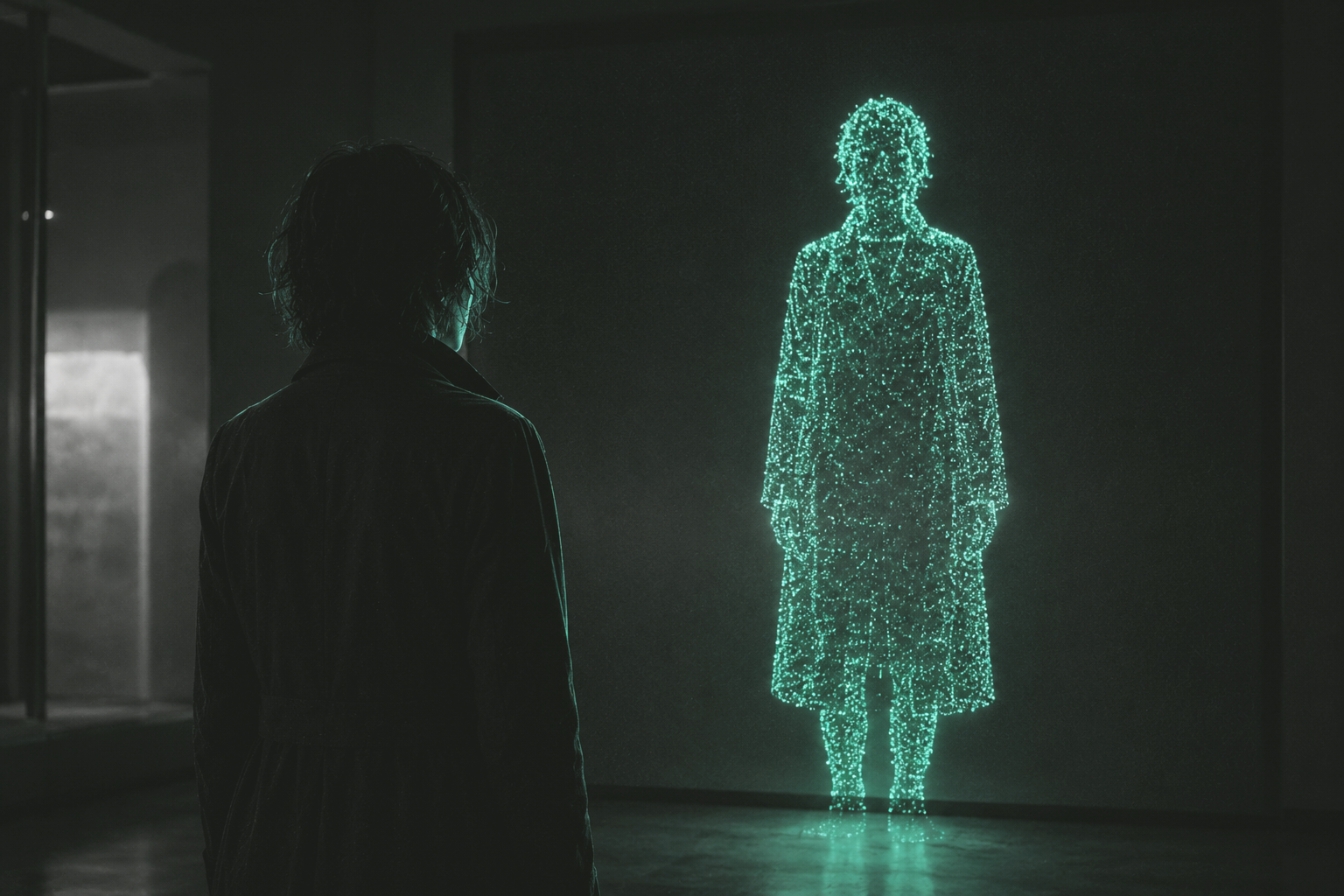
There is a second you
It does not have your name, and it has never needed it. It is a working portrait assembled from everything around the name: a device, a postcode, an age band, an income bracket, the hours you keep, the things you buy, the places your phone rests at night. In the systems that matter, that portrait is you. It decides which prices you see, which ads follow you, which offers never reach you, which tier of risk you get filed under. The name is optional. The behaviour is the identity.
This is not a prediction. Profiles like this already exist, and they are bought and sold every day.
It was finished years ago
When the US trade regulator studied nine data brokers, it reported billions of data elements covering nearly every American consumer. One broker held roughly three thousand data segments on nearly every one of them. Another was adding three billion new records a month. The regulator's own chair summed it up: these companies often know as much about us as our family and friends do, or more.
That report is from 2014. The portrait of nearly everyone was already detailed enough to alarm a regulator twelve years ago, before another decade of apps, checkouts, sign-ups and sensors was poured into it. So if you have lived any kind of digital life in the last two decades, the honest question is not whether a profile of you exists. It is how many versions are being maintained, and how current each one is.
The portrait, counted in 2014
A decade of apps, checkouts and sensors has been poured in since.
Why it never needs your name
The profile is built on things that are not your name. A device identifier. A hashed email. A bundle of details that, put together, fit only you: age band, postcode, income, habits. Files built this way get called anonymised, and that label is a sales pitch, not a description. It is a claim that is cheap to make, expensive to test, and almost never tested. When researchers do force the question, the names come back, with unsettling reliability.
But re-identification is almost beside the point, and this is the part worth sitting with. The profile does not have to be traced back to you to be used against you. Pricing, ranking, targeting and exclusion all run perfectly well on the nameless version. The law asks one question of a file like this: can it be linked to you? The business asks a different one: does it predict you? The industry only needs the second, and a file that never carries your name can follow you for twenty years without the law ever touching it.
Which is also why a deletion request slides off it. As we saw when researchers asked the broker layer to delete them, "we hold no record of this person" can be a narrow truth. The request runs on a name. The portrait runs on everything else.
Why nobody can audit it
You might expect that somewhere, someone could at least trace the thing: where it came from, who holds copies, which borders it crossed. Nobody can, and that is not a gap in the paperwork. It is the shape of the trade.
In that same study, the regulator found that seven of the nine brokers supplied data to one another, and concluded, in its own words, that "it would be virtually impossible for a consumer to determine how a data broker obtained his or her data; the consumer would have to retrace the path of data through a series of data brokers." The trail is not hidden. It is destroyed by ordinary business: every time one broker sells to another, the chain back to the source breaks a little more. Add the copies rolling through backups and partners and everything else deletion never reaches, the registries that only list the brokers who registered, and the operators sitting past the practical reach of any regulator's letter, and the audit you would want is not expensive. It is not a thing that exists. The people maintaining the portrait could not draw you its map either.
The only lever is freshness
So the portrait exists, it does not need your name, and no one can account for it. What is left?
The one thing it cannot get for itself: freshness. The whole economy runs on it. Brokers re-acquire people precisely because data goes out of date; a profile that stops being fed starts guessing wrong, and a profile that guesses wrong loses its value. Where does the feed come from? Not from thin air. From the first-party companies you actually deal with: the apps, the checkouts, the sign-ups, the accounts still quietly reporting years after you stopped caring. That layer you can reach, because there you are a customer with standing, not a stranger writing to a warehouse. Object to the selling, the sharing and the profiling where you are known, and the nameless version of you downstream starts living on old news.
You cannot be deleted from the shadow economy. You can stop being current in it. That is not a consolation prize. In a market that runs on recency, stale is the nearest thing to gone.
A portrait for a portrait
Here is the imbalance worth correcting. They keep a nameless portrait of you, maintained without your knowledge and beyond your audit. The answer is not to burn it, because you can't. The answer is to keep your own portrait of them, with everything theirs lacks: names, dates, exact words. Which companies hold your data. What you asked them to stop. What they claimed in reply, and when the claim was made, and what it turned out to be worth.
DÆTRAX is where you keep that portrait: you log the companies you actually use, the requests are drafted for you to send from your own inbox, and every claim and silence lands on a dated record you hold. Their file on you is deniable by design. Make yours undeniable. Start your record →